
Home Care Services in Halifax and Nova Scotia: What They Include and How to Choose
A plain-language guide for families: what home care covers, the difference between ADL and IADL support, signs it may be time to start, and what to look for in a provider.

Quick answer: Home care services are private, non-clinical supports delivered in a person’s home by a trained caregiver. They fall into two groups: ADL support (bathing, dressing, grooming, mobility, feeding) and IADL support (meals, housekeeping, laundry, errands, appointments). Families in Halifax and across Nova Scotia use them for aging in place, recovery after a hospital stay, and respite for family caregivers. The best provider is one that verifies its caregivers, matches the role to the need, and makes booking and visit updates clear.
What are home care services?
Families looking for home care in Halifax usually need dependable help with the practical parts of daily life. Home care means a caregiver comes to the home and helps with personal care, household tasks or companionship, so a person can stay comfortable and independent where they live.
It is non-clinical. Caregivers do not provide nursing care, medical treatment or medical advice. In Nova Scotia, publicly funded home care is arranged through Continuing Care Nova Scotia, and many families add private care on top of it for extra hours, flexible scheduling or tasks public services do not cover. CareO’Clock operates in alignment with Nova Scotia Health, Continuing Care Nova Scotia and other applicable care standards.
Whether support is needed after a hospital stay, during recovery or as part of ongoing senior care, the goal is the same: safe, dignified help at home from a caregiver whose role matches the level of care required.
ADL vs IADL: the two groups of home care support
Care providers and health professionals describe most needs using two terms. Knowing which group a task falls into makes it easier to describe what your family needs.
| Group | What it means | Examples |
|---|---|---|
| ADL Activities of Daily Living | Essential personal tasks that can become difficult with age, illness, injury or reduced mobility. | Mobility and ambulation, grooming, dressing, hygiene, bathing and shower standby, feeding and meal-time help. |
| IADL Instrumental Activities of Daily Living | Practical tasks that keep someone organized, comfortable and independent at home. | Light housekeeping, laundry, meal preparation, shopping and errands, appointment companionship, respite coverage. |
Many people need help with IADL first, then ADL as needs change. A good care plan can start small and grow with the person.
Common types of home care services
Most families combine a few of these. Each links to a page with full detail and booking.
Personal care
Help with bathing, grooming, dressing, mobility and the routines that are harder to manage alone.
Bathing safety
Standby support to lower fall risk. See shower and standby assist.
Household support
Meal preparation, light housekeeping, laundry and errands that keep the home running.
Appointment support
A caregiver who goes with your loved one and takes notes. See appointment accompaniment.
After a hospital stay
Help for the first days home. See hospital discharge home support.
Respite and companionship
Relief for family caregivers and company for loved ones. See sitters and care companions.
Ready to compare in detail? Browse the full CareO’Clock services page, and see exact pricing for your services when booking through the Home Care Portal.
Signs it may be time to consider home care
Needs rarely arrive all at once. Watch for patterns rather than single bad days:
- Changes in appearance or hygiene, such as skipped bathing or unchanged clothing.
- Mobility concerns, including near-falls, unsteadiness on stairs or avoiding the bathroom shower.
- Meals and housekeeping slipping, like an empty fridge, spoiled food or a cluttered home.
- Missed or confusing appointments and medication routines.
- Caregiver strain, when a spouse or adult child is exhausted and has no time to rest.
- A recent hospital stay, illness or injury that has reduced strength or independence.
If several apply, a few visits a week is often a gentle first step. Concerns about memory or health should be raised with a doctor. Caregivers support daily life but do not diagnose or treat.
How to choose a home care provider
Families comparing home care services in Halifax tend to look for three things first: caregiver trust, clear booking and support that fits real life at home. Use these questions with any provider.
Are caregivers verified?
Ask about identity checks, a Criminal Record Check, a Vulnerable Sector Check and current first aid. CareO’Clock’s vetting and safety process covers all of these and a signed code of conduct.
Is the role matched to the need?
Personal care, housekeeping and companionship are different jobs. The caregiver should fit the support requested.
Is booking clear?
Look for transparent scheduling, clear next steps and prices shown before you commit.
Can family see what happens?
Live visit updates and a simple way to report concerns give long-distance families peace of mind.
Is the plan flexible?
Some families need weekly help, others short-term recovery or respite. The plan should adapt to the home.
Is the scope honest?
A trustworthy provider is clear about what caregivers do not do, such as nursing care or medical advice.
Private and non-clinical
CareO’Clock adds to existing public home care. It does not replace nursing, emergency services or case management. In an emergency, call 911. Prefer to choose a specific caregiver? Learn about private caregivers in Halifax.
How to get started with home care
1. List what is hardest right now
Write down the daily tasks that cause stress or risk, sorting them into ADL and IADL using the table above.
2. Involve your loved one
Talk about what they want help with and what they want to keep doing themselves. Independence and dignity come first.
3. Start with a realistic schedule
A few hours for the tasks that matter most is often better than trying to cover everything at once.
4. Check coverage and book online
Create a free client account at app.careoclock.ca, choose your services, pick a date and time, and add notes.
5. Review and adjust
Use visit updates to see how it is going, and change the plan as needs shift. Questions? Talk to our team or call 902-802-3715.
Check whether care is available in your neighbourhood. No payment needed.
One app for all your home care needs
We built the CareO’Clock Home Care Portal to make home care easy to manage. You can do everything from your phone, tablet or computer browser or install the mobile app for easy access and notifications.
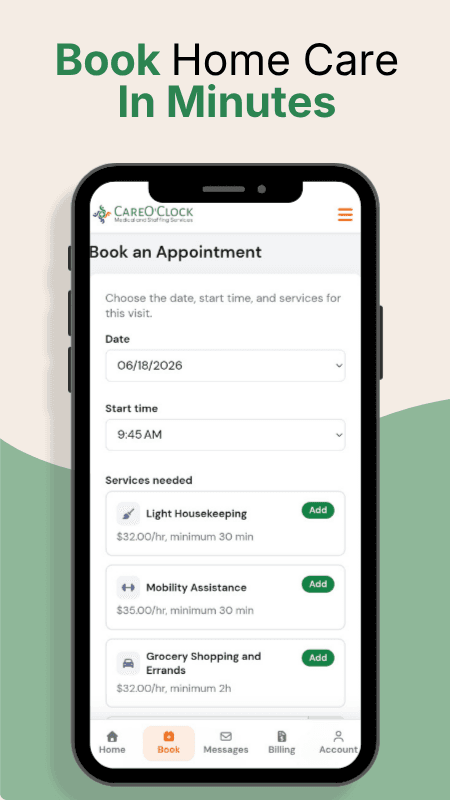
Book in minutes
Pick the service, date and time, and confirm.
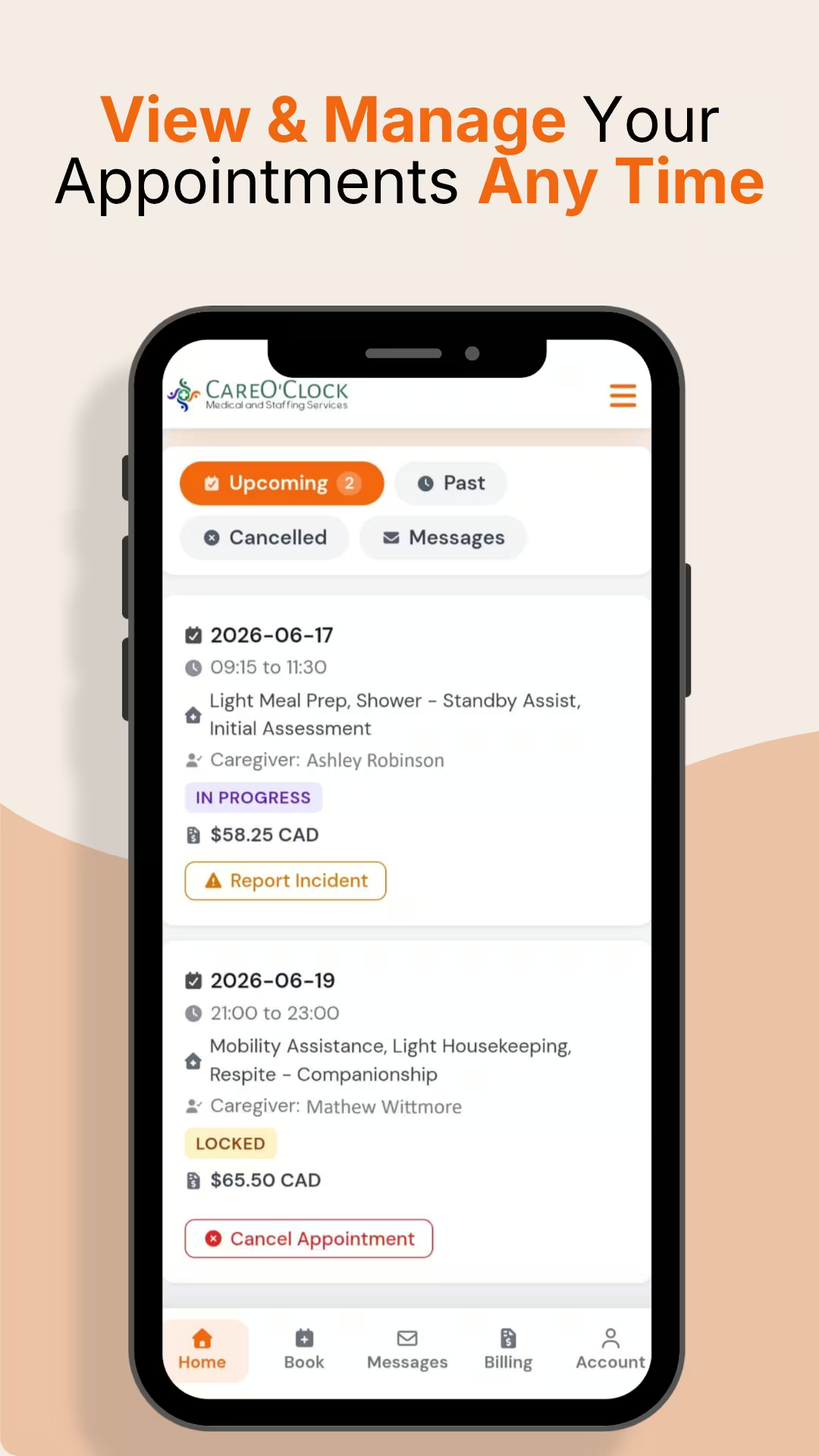
Manage appointments
See upcoming visits and update details anytime.
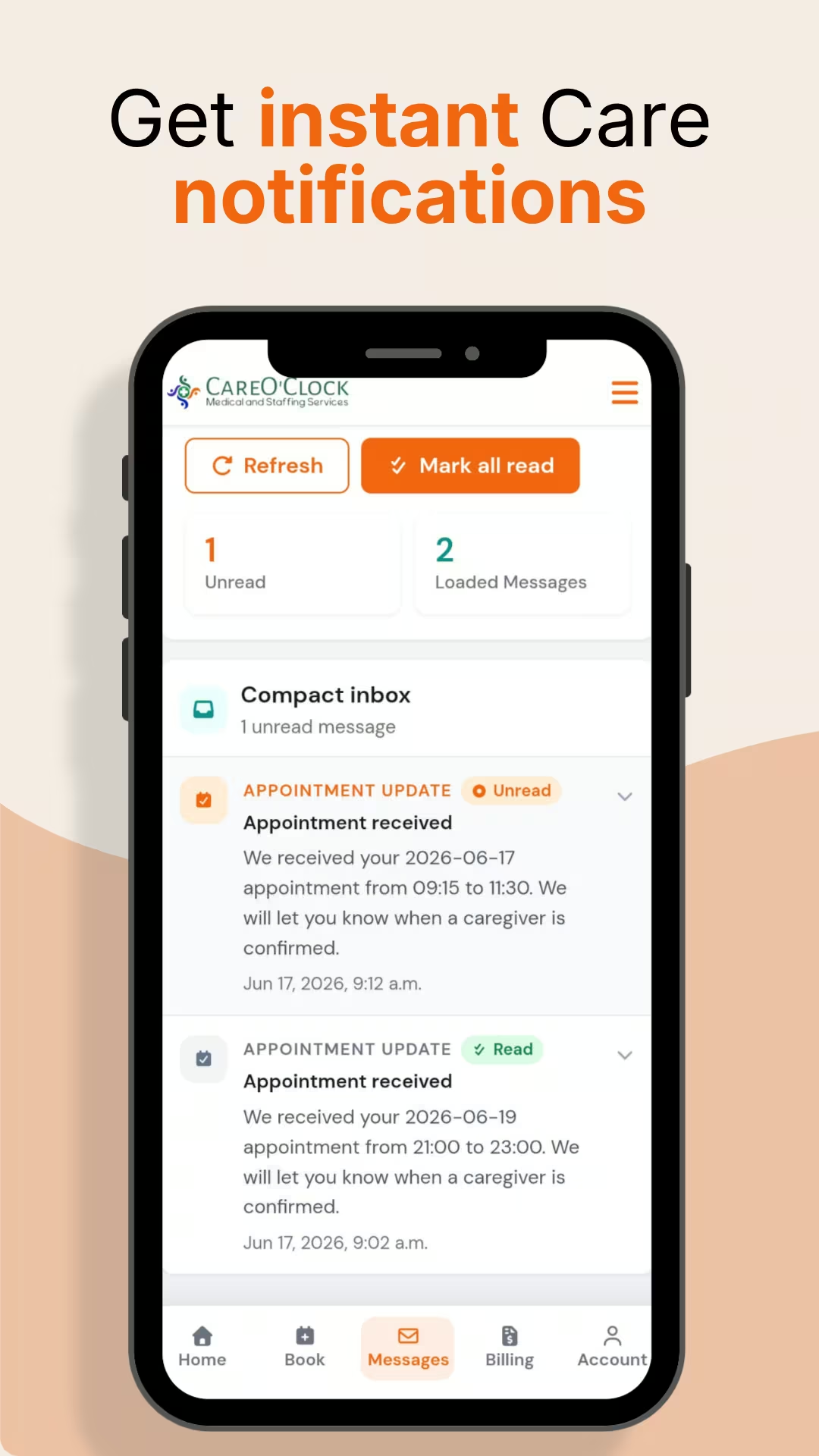
Live care updates
Know when the caregiver arrives and when the visit is done.
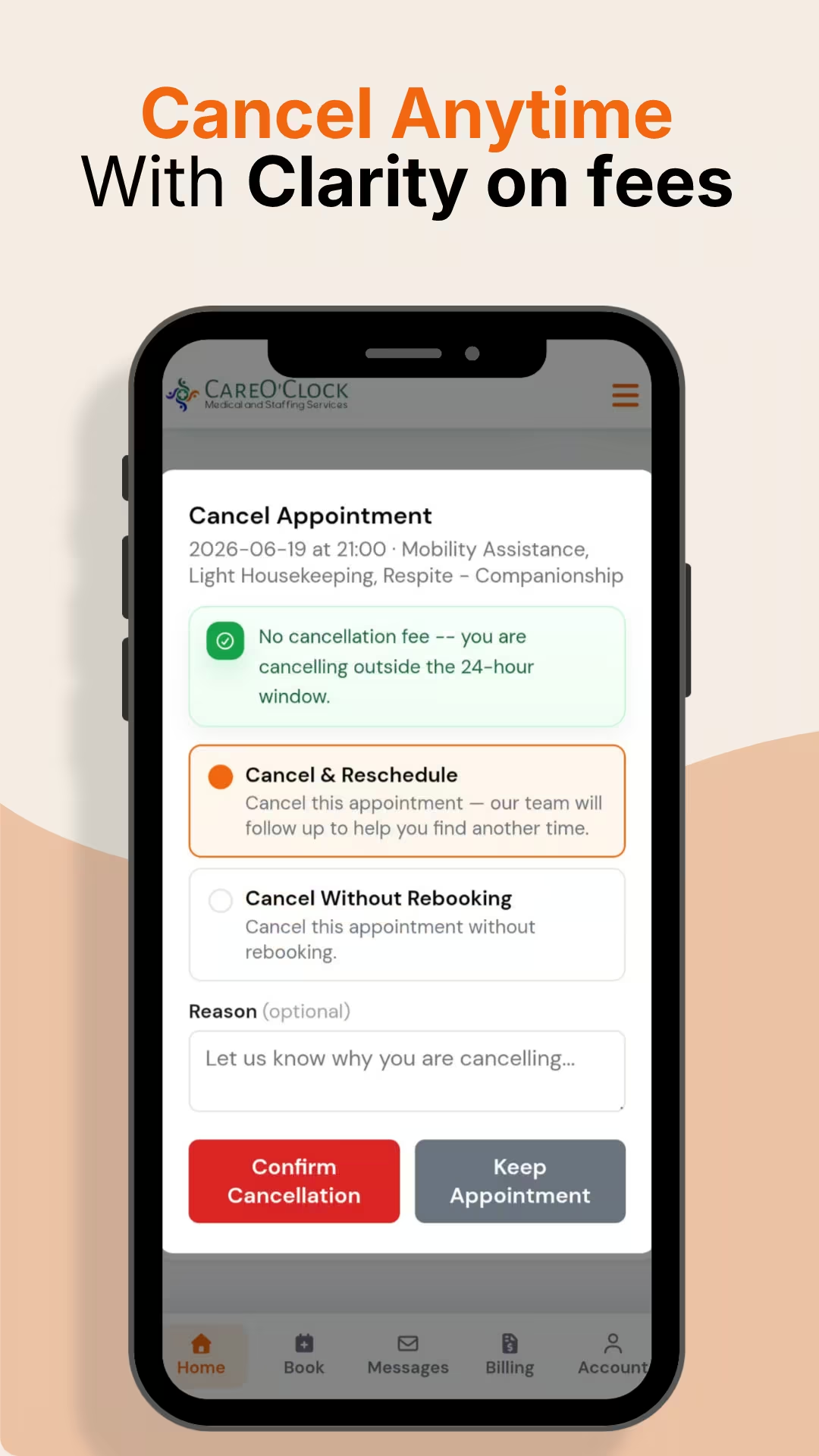
Cancel with ease
Change of plans? Cancel from your phone.
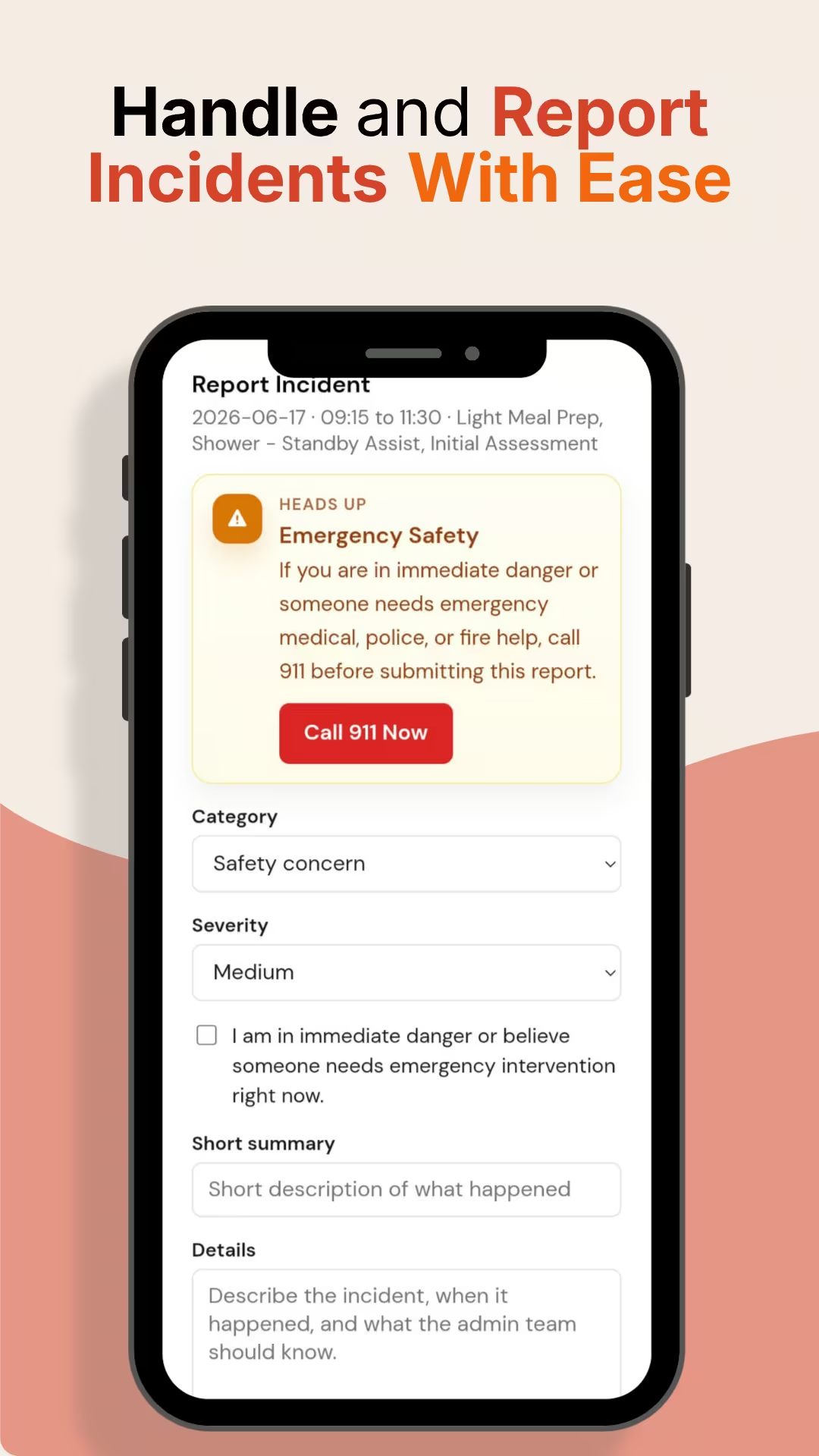
Report concerns
Raise an issue and it is linked to the visit for team review.
Home care services: questions families ask
What are home care services?
Home care services are private, non-clinical supports delivered at home by a caregiver, including personal care, meal preparation, housekeeping, errands, companionship and respite for family caregivers.
What is the difference between ADL and IADL support?
ADL are essential personal tasks such as bathing, dressing, grooming, mobility and eating. IADL are the practical tasks that keep a home running, such as meals, laundry, shopping and errands.
Is home care the same as nursing care?
No. CareO’Clock provides non-clinical support. Caregivers do not give nursing care, medical treatment or medical advice.
Does private home care replace public services?
No. Private care can add to existing public home care. It does not replace nursing, emergency services or public home care case management.
Are CareO’Clock caregivers vetted?
Yes. Every caregiver completes identity and work eligibility verification, a Criminal Record Check, a Vulnerable Sector Check and a current first aid certificate, and accepts our code of conduct. Read the full vetting process.
Can I book short-term or occasional care?
Yes. Some families book regular weekly visits, others need short-term recovery support or a few respite hours.
How do I book home care in Halifax?
Check coverage and create a free client account at app.careoclock.ca, choose the service, pick a date and time, and confirm. You can also call 902-802-3715 or contact our team.
Which areas do you serve?
Halifax, Dartmouth, Bedford, Lower Sackville, Cole Harbour, Fall River, Eastern Passage and communities across Nova Scotia, subject to caregiver availability. See all locations.
About CareO’Clock
CareO’Clock connects families across Halifax and Nova Scotia with vetted caregivers for private, non-clinical home care, booked online with live visit updates. This guide is general information, not medical advice.
Book home care in Halifax and Nova Scotia
When you are ready, book online in minutes. If you still have questions, our team is happy to talk through the right level of support.
CareO’Clock operates in alignment with Nova Scotia Health, Continuing Care Nova Scotia and other applicable care standards. Private, non-clinical home support. Availability depends on location, service needs and caregiver availability.